


Customer story
Groupon  is building a second workforce

The company that made local deals part of everyday life is now rebuilding how it works. Its data, metrics and know-how are readable by people and AI agents alike, and employees hand agents real work every day.
Built on Keboola Data PlatformAgnes

- employees working with agents every month
- 398
- for a new executive to get started, down from 4–8 weeks
- Day one
- AI agent runs in the last 30 days
- 11,852
- Founded
- 2008, Chicago
- Industry
- Local marketplace
- Presence
- North America & Europe
- Listed
- NASDAQ: GRPN
About Groupon
A world of experiences. A new chapter.
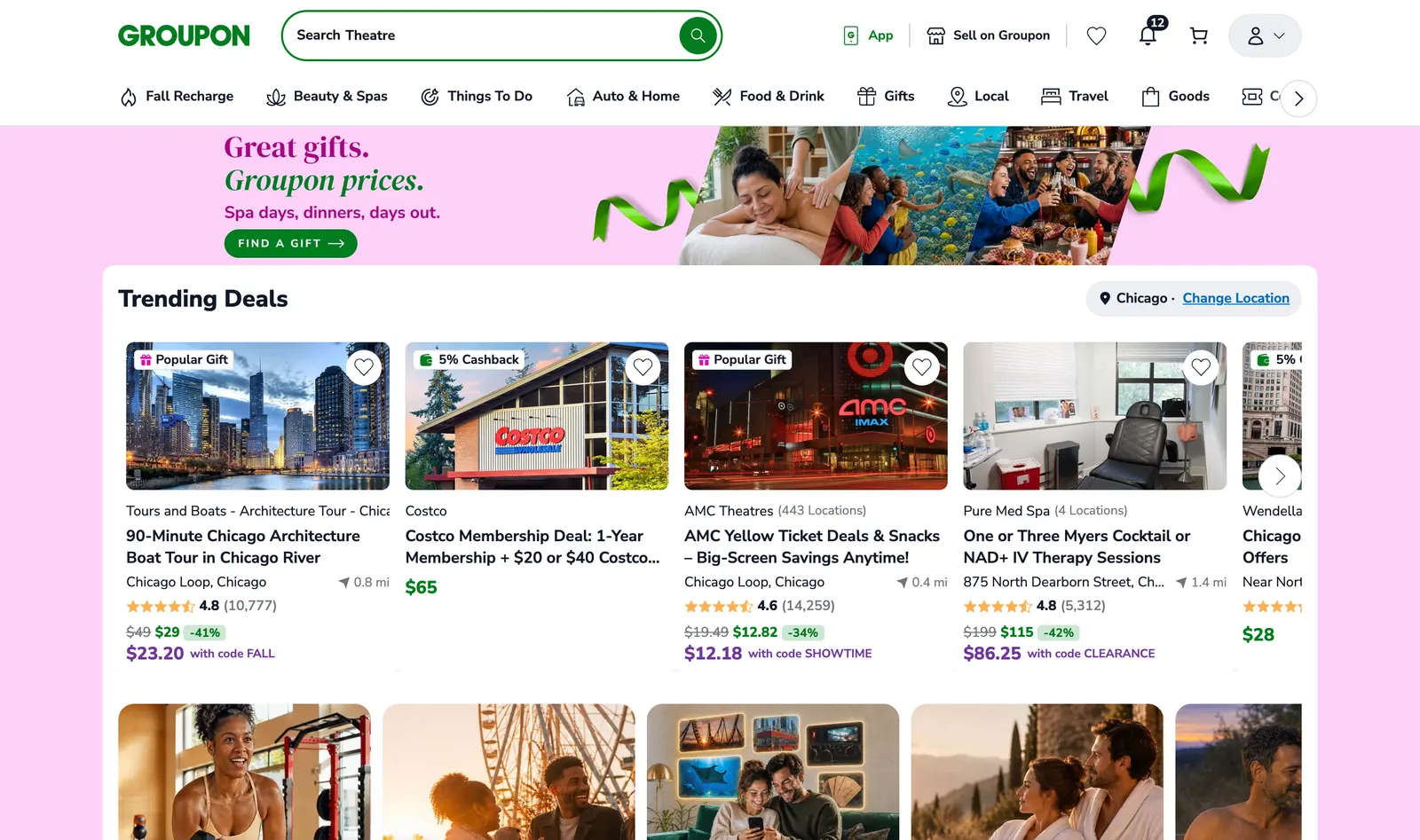
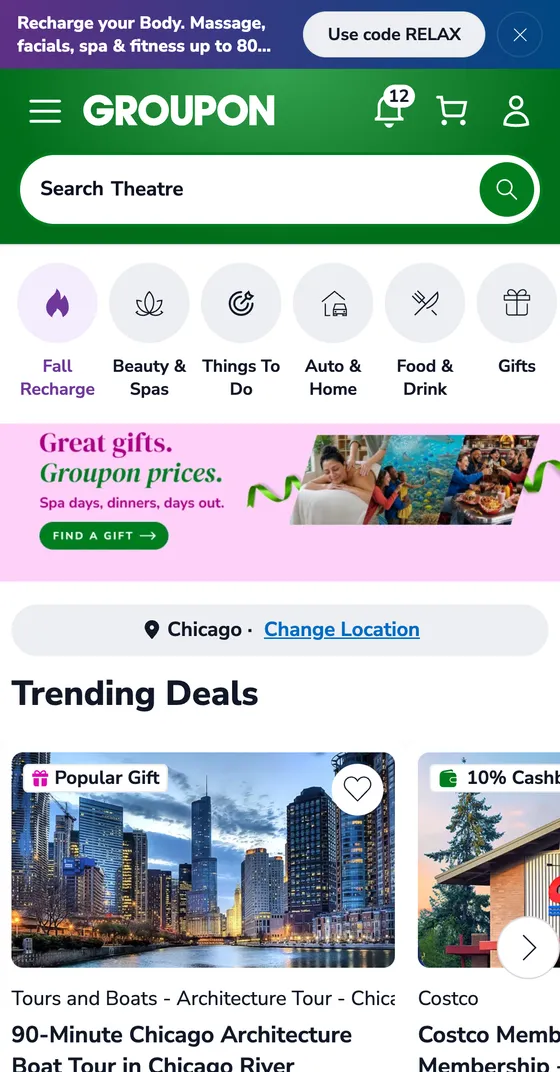
Dinner around the corner. A weekend away. Something new to try.
Groupon connects people with local businesses and experiences. Founded in 2008, it helped make local deals a familiar part of everyday life across North America and Europe.
It is also a company with a remarkable history: in 2010, Groupon turned down an acquisition offer of roughly $6 billion from Google. The next chapter is about how the company itself works, and who does the work.
The challenge
A business to rebuild. A data estate to untangle.
In 2023, Groupon warned of uncertainty about its ability to continue operating. After years of restructuring from a peak of roughly 8,000 employees, a smaller organisation had to get more done with fewer people. That meant rethinking how it worked, starting with the data operation behind its day-to-day decisions.
~500
core data pipelines
~2,800
processing tasks
40+
business areas
Hundreds of pipelines. Dozens of business areas.
Groupon’s data platform ran roughly 500 core data pipelines and 2,800 processing tasks across more than 40 business areas. Marketing, revenue management, finance and other teams depended on a substantial operation behind the reports they used every day.
Different systems doing overlapping work
The architecture review identified duplicated processing, repeated copies of data and multiple sources of truth. Running the estate required specialist knowledge across ingestion tools, processing systems, warehouses and reporting applications.
Knowledge lived in people’s heads
The 2024/2025 review identified gaps in shared metric definitions, data ownership and standards. Knowing which number to trust usually meant knowing who to ask. That made every new joiner, and every new question, slower than it needed to be.
A migration that had to keep the business running
Departments were at different stages. Marketing was using the new foundation, revenue management used both old and new sources, and other teams still relied on legacy data. The task was to move useful workloads, clarify responsibilities and grow adoption while existing reporting continued.
What it cost
- New leaders spent weeks learning which reports to trust and who owned which number.
- Simple questions waited in analyst queues, behind access tickets and SQL.
- The same metric could mean different things in different meetings.
- A smaller team had to carry a larger, duplicated data estate.
Why Keboola
AI on top of chaos is still chaos.
Groupon did not want another AI tool sitting beside the data. It wanted agents that answer from the same governed numbers the business runs on. That made the data foundation the first decision, not the last.
The foundation was already Keboola
Keboola already connected Groupon’s sources and ran the managed workflows behind its reporting. The data agents would need was on a platform the company knew.
Change without stopping the business
Groupon needed to move workloads one at a time while existing reporting kept running. Keboola supported a phased transition instead of a big-bang migration.
Governance built in, not bolted on
Ownership, shared definitions and records of where data came from are part of the platform. That is what makes a number safe to hand to an agent.
One foundation for people and agents
Agnes works on the same governed data, with the same role-based access. There is no second copy of the business for AI to drift from.

The solution · Step 1: the foundation
Before the agents, the foundation.
Agents are only as good as the data they can trust. Keboola’s role began long before the first agent ran: connecting data, automating the work that prepared it, and giving analysts a managed place to build. The transition was phased, with existing and new systems running alongside each other.
 Company dataInformation across the business


 Connected. Governed.
Ready.
that agents can read

 People + agentsWorking from the same numbers
Connect the sources
and automate the workKeboola’s connectors and managed workflows gave teams a common way to bring data in, prepare it and send it to downstream tools. Analysts could develop data products without setting up and maintaining the underlying infrastructure themselves.
Give shared numbers a clear home
The governance design separated source data, a managed core and business-ready datasets. It set out shared metric definitions, ownership and access responsibilities, with records of where data came from and how it was processed.
Let business teams build
on the foundationA self-service layer let analysts reuse existing datasets, add business context and test new ideas. The core team maintained shared data while departments developed the reporting and applications they needed.
Reduce reliance on Teradata,
workload by workloadGroupon’s 2024/2025 plan targeted a smaller Teradata footprint, moving selected reporting workloads to BigQuery and retiring legacy processing. Keboola supported data integration and managed workflows in the evolving platform. The move continues one workload at a time, so reporting never has to stop.
What teams were already doing with the data
A foundation with everyday business uses.
Marketing investment
Campaign ROI, marketing feeds and regional allocation of marketing spend.
Revenue economics
Profitability analysis, financial forecasting and budgeting, and revenue performance monitoring.
Commercial decisions
Market-gap analysis and sales-productivity reporting.
That foundation made the next step possible: turning the whole company into something people and agents can read. A machine-readable company →
If it could not carry my daily decisions, it was not worth shipping to you.
 Dušan ŠenkyplCEO, Groupon
He made himself the first user, including using Agnes during a major partner negotiation.
Step 2: a machine-readable company
One version of the business. Readable by people and agents.
Most companies keep their operating knowledge in slide decks, one-off queries and the heads of a few experienced people. Groupon moved it into a governed layer, so that a new colleague and an AI agent can both find the right number, know what it means and act on it.
- governed data packages
- tables, access granted by role
- metrics with one canonical definition
01 / One definition for every number
Every metric is registered once, with a single canonical definition. Revenue means the same thing in a finance review, a marketing dashboard and an agent’s answer. The number lives in the platform, not in someone’s head.
02 / Access by role, not by ticket
Data access is granted by role. A new joiner gets the right data on day one: no access ticket, no SQL, no waiting in an analyst queue.
03 / The same foundation for people and agents
An agent answering a question reads the same governed tables and definitions a finance analyst would. People and agents work from one version of the business.
Step 3: a second workforce
Employees are not chatting with AI. They delegate to it.
On May 4, 2026, Groupon launched FoundryAI, its internal AI workspace built on Claude Code and Agnes. Employees did not wait for IT to build what they needed. They started handing agents real work, and building capabilities for each other.
Questions and instructions in plain language, from Finance to Engineering. Nobody had to learn SQL first.
working sessions
specialist skills put to work
employees have used it since launch
use it every week
May 4, 2026
FoundryAI opensA first wave of employees starts working with company data through Agnes.
July 17, 2026
A company-wide invitationAn all-hands memo from the CEO invites every employee in.
September 2026
Agents become the way inGeneral direct database access retired. People reach data through an agent that knows Groupon.
A human–agent economy
Built by the business, not for it.
Departments ship their own plugins. The platform team curates them. Anyone can publish a skill that colleagues, and their agents, can reuse the next morning.
department marketplaces
curated plugins
where any employee publishes a skill of their own
A skill one person builds is shared with everyone who needs it.
“This is where it stops being yours alone.”
 Dušan ŠenkyplCEO, Groupon
The impact
Not a new AI tool. A new way to run the company.
When the company’s data, definitions and know-how are readable by machines, the biggest change is not speed on any one task. It is how quickly someone new becomes useful, and how much of the work people choose to delegate.
Time people spent working with agents, measured across the company.
Engagement, not a claim of time savedNew leaders start contributing on the first day.
A senior hire used to spend their first weeks learning which reports to trust, who owns which number and where the data lives. Now they start with an agent that already knows Groupon’s data, metrics and processes. No analyst queue, no access tickets.
Day one instead of 4–8 weeksKnow-how stops living in a few heads.
Definitions sit in the platform and skills are shared through department marketplaces. When someone leaves or changes role, what they built stays behind for the next person and their agents.
12 department marketplacesDay one, in practice
“It’s brilliant. It’s my coach and my mentor. It’s teaching me everything about the business right now.”
 Adi RajkumarCOO, Groupon
What changed day to day
A different route to the answer.
Know the database. Or find someone who does.
- Direct database access, by request
- SQL, or a ticket to someone who writes it
- Metric definitions held by a few experts
- Weeks for a new hire to find their way around
Ask in plain language. Or hand the work over.
- Ask as you would ask a colleague
- One canonical definition behind every number
- Skills one person builds, everyone can reuse
- Access by role from day one
Direct access remains for genuine edge cases Agnes cannot support, on a named exception list.
From the foundation
to a second workforce.
“Go install it.”
Dušan ŠenkyplCEO, GrouponAgnes
Agents are only as good as the data behind them.
See how Groupon made its business readable by people and agents, and what the same foundation would look like for yours. Thirty minutes with the Agnes team.